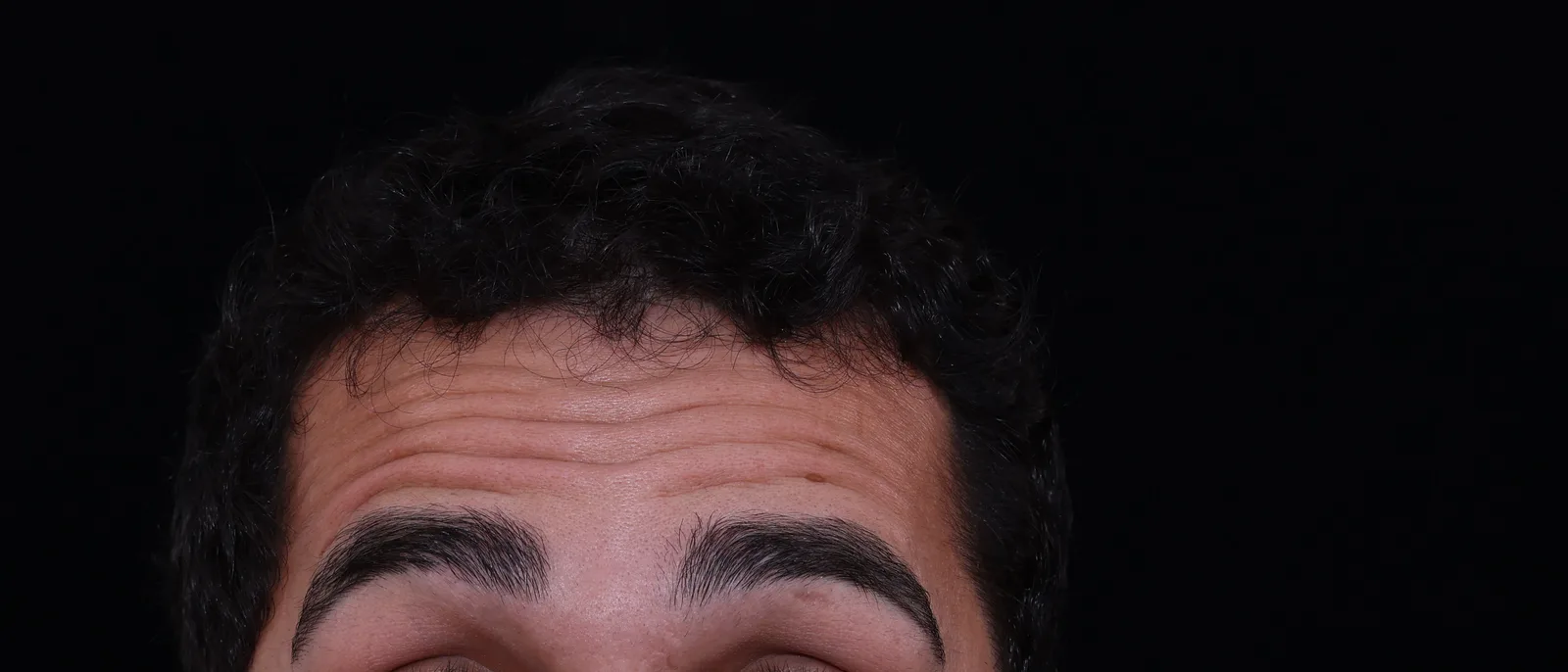
The goal is not to freeze expression. It is to optimize it.
Neuromodulators (commonly known as Botox®) are one of the most effective tools in aesthetic medicine. When used with precision, they soften lines, improve muscle balance, and enhance how the face is perceived, while preserving natural movement.
At Skinbeat Medical Center in Dubai, neuromodulators are not used in isolation. They are integrated into a non-surgical facelift approach, enhancing results achieved with treatments such as hyaluronic acid (HA) fillers, perioral rejuvenation, and periorbital treatments.
This approach is based on the broader concept of full face rejuvenation.
What Are Neuromodulators
Neuromodulators are injectable treatments based on botulinum toxin that temporarily reduce the activity of specific muscles.
They are used to:
- Soften dynamic lines and wrinkles
- Improve muscle balance
- Reduce negative facial expressions
- Support overall facial harmony
Beyond Wrinkles: Their Real Role
Neuromodulators are often associated with treating lines, but their role is broader.
They influence:
- Expression
- Facial balance
- The way the face moves and is perceived
They are a key component of a non-surgical facelift approach, especially when combined with structural treatments such as HA fillers and volume restoration in areas like the cheeks, tear trough, and jawline.
What Can Be Treated
Neuromodulators may be used to treat:
Upper Face
- Forehead lines
- Frown lines (glabella)
- Crow’s feet
Lower Face and Neck
- Downturned mouth corners (DAO)
- Chin dimpling
- Platysmal bands (neck)
Expression-Related Concerns
- Gummy smile
- Imbalance in facial movement
These treatments often complement structural treatments such as perioral rejuvenation, lip enhancement, and chin and jawline contouring.
Facial Slimming and Jawline Refinement
Neuromodulators can also be used to treat the masseter muscles, which are responsible for chewing.
In selected patients, reducing the activity of these muscles can:
- Create a slimmer, more refined lower face
- Improve facial proportions and contour
- Soften a wider or more square jawline appearance
Bruxism (Teeth Grinding)
Masseter treatment can also help patients who grind or clench their teeth at night (bruxism).
By reducing excessive muscle activity, neuromodulators can:
- Decrease clenching and grinding
- Reduce associated muscle tension
- Improve comfort in the jaw area
Muscle Balance and Facial Harmony
Each muscle in the face interacts with others.
By selectively modulating muscle activity, we can:
- Improve facial balance
- Soften negative expressions
- Enhance natural expression
This is particularly important in:
- The perioral region, which influences smile dynamics
- The periorbital region, which affects how rested or tired the face appears
A Combined Approach
Neuromodulators achieve their best results when integrated into a broader treatment plan.
They are combined with:
- Structure and support → HA fillers
- Volume restoration → cheeks, tear trough, and jawline
- Skin quality treatments → skin quality injectables
- Skin tightening → energy-based devices
This combined approach is part of a non-surgical facelift approach, guided by the principles of full face rejuvenation.
Who Is This Treatment For
Neuromodulators may be appropriate for patients who:
- Notice lines with facial movement
- Feel their expression looks tired, tense, or harsh
- Want to prevent deeper lines from forming
- Seek natural, non-surgical improvement
- Experience jaw tension or teeth grinding
What to Expect
- Treatment is quick and minimally invasive
- Effects begin within a few days
- Full effect is typically seen within 1–2 weeks
Results:
- Look natural
- Preserve movement
- Improve facial expression
Maintenance
Results typically last:
- On average, around 4 months
Safety
At Skinbeat Medical Center:
- Treatments are performed using clinically validated neuromodulators
- Advanced techniques are applied with precision
- A multimodal approach is adopted
- Safety is prioritized at every step
The Skinbeat Philosophy
We do not treat lines in isolation.
We treat expression as part of the whole face.